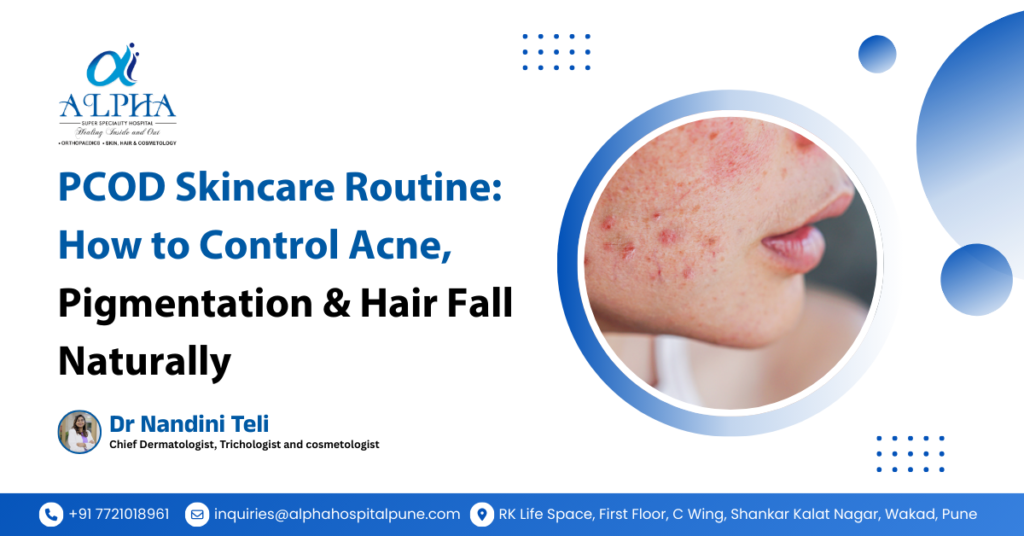
Dermatologist-Approved Daily Skincare Routine for PCOD
(Suitable for Women in Pune’s Humid and Polluted Climate)
This natural skincare routine has been designed by Dr. Nandini Teli for women struggling with PCOD acne, pigmentation and hair fall.
Morning Routine
Step 1: Gentle Cleanser
Use a sulphate-free, pH-balanced cleanser to remove oil and dirt. This helps control acne without stripping the skin barrier.
Step 2: Niacinamide Serum
Niacinamide reduces pigmentation, controls oil production and strengthens the skin barrier. Ideal for Pune’s pollution-prone areas like Wakad, Baner and Pimpri-Chinchwad.
Step 3: Vitamin C Serum
Brightens skin, reduces dark spots and improves glow.
Step 4: Oil-Free Moisturiser
Hydrates skin without clogging pores. Helps prevent breakouts.
Step 5: Sunscreen (SPF 50)
Essential for preventing pigmentation. Must be applied even indoors, especially in sunlight-exposed cities like Pune.
Evening Routine
Step 1: Double Cleansing
Removes sunscreen, pollution and makeup, preventing clogged pores.
Step 2: Salicylic Acid or Glycolic Acid
Helps unclog pores and reduce acne. Use 2–3 times a week only.
Step 3: Retinol (Night Only)
Reduces acne, improves texture, and fades pigmentation. Start slowly if you have sensitive skin.
Step 4: Non-Comedogenic Moisturiser
Maintains hydration and calms inflammation.
Natural Home Remedies That Actually Work for PCOD Skin
1. Aloe Vera for Soothing and Hydration
Helps reduce redness and acne inflammation.
2. Multani Mitti (Fuller’s Earth)
Absorbs excess oil, reduces blackheads and unclogs pores.
3. Green Tea Ice Cubes
Rich in antioxidants, good for reducing puffiness and acne-causing bacteria.
4. Turmeric with Curd
Reduces pigmentation naturally due to anti-inflammatory properties.
Hair Fall Control Routine for PCOD
Hair fall is extremely common in PCOD patients visiting Alpha Hospital in Wakad. A consistent routine can strengthen the scalp and reduce shedding.
Step 1: Gentle Shampoo
Use a sulphate-free shampoo 2–3 times a week to reduce scalp irritation.
Step 2: Rosemary or Onion Oil
Boosts blood circulation and supports hair regrowth.
Step 3: Anti-Dandruff Treatment (If Needed)
Helps improve scalp health and prevents infection-related hair fall.
Step 4: Dermatologist Treatments
Dr. Nandini Teli may recommend PRP therapy, mesotherapy or medical lotions for severe hormonal hair loss.
Additional Lifestyle Tips for PCOD Skin and Hair Health
1. Reduce Sugar and Processed Food
Helps control insulin levels, reducing pigmentation and acne.
2. Regular Exercise
Improves blood circulation and hormonal balance.
3. Hydration
Drink 3–4 litres of water daily to maintain healthy, glowing skin.
4. Stress Management
Yoga and meditation help regulate hormones naturally.
5. Regular Dermatologist Check-Ups
Essential for customised treatment. Alpha Hospital, Wakad, Pune provides advanced PCOD skincare solutions.